

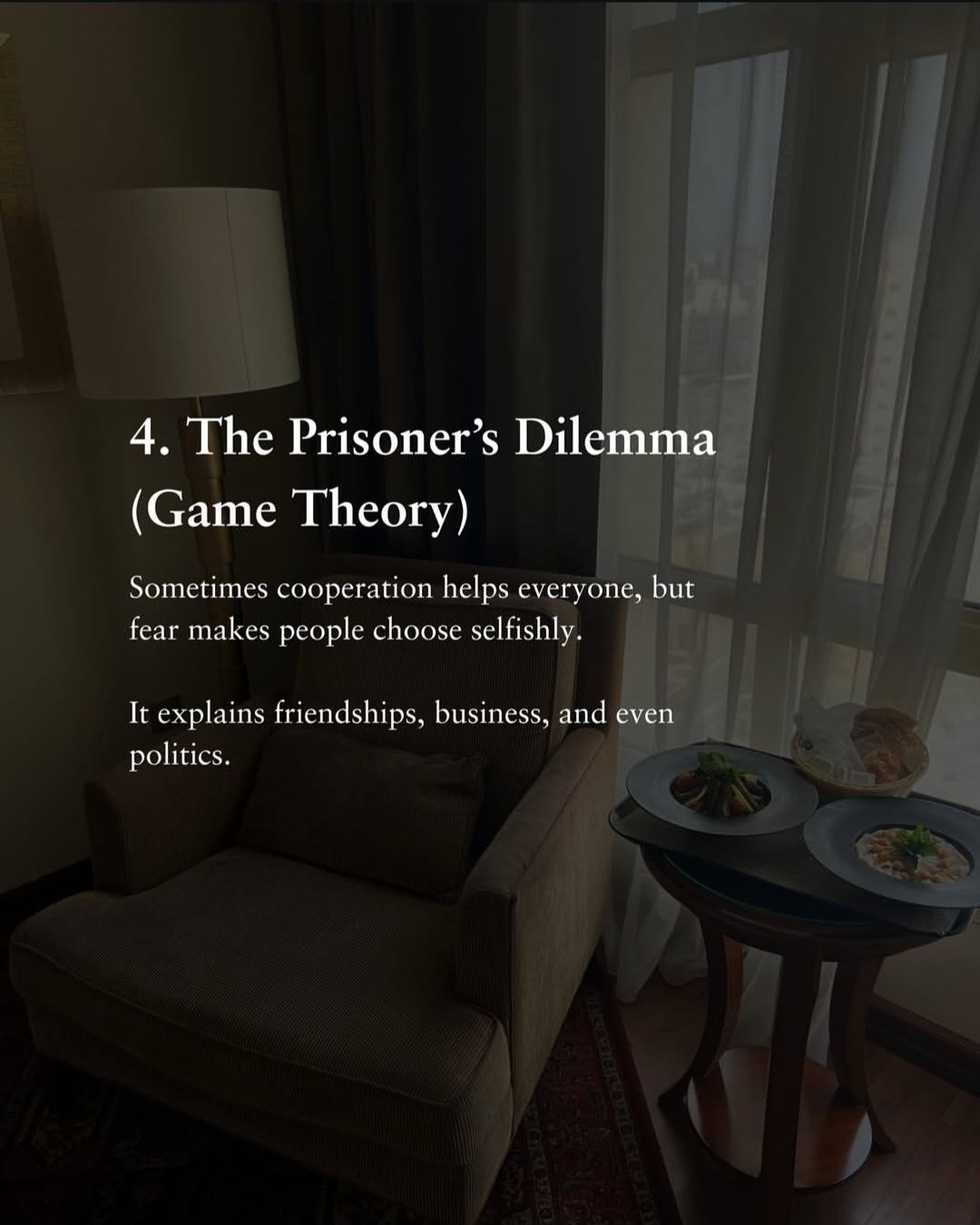
Latest edition. IntroductingThe Prisoner’s Dilemma (Game Theory) – cooperation helps, but fear makes people selfish, explains friendships, business, and politics
The Prisoner’s Dilemma (Game Theory) – a concept which explains why two individuals (suspects, prisoners, etc.) choose uncooperativeness even if it is best to do so. This dilemma argues individual rationality (self-interest) against collective well-being (cooperation). Humans are selfish and naturally choose to act in their own best interest. This propensity toward selfish experiences is what is called the prisoner’s dilemma.
In the prison system, a prisoner testifying against another indicates behavior leaning entirely toward self-preservation hence the greatest payoff comes from betrayal of the group. Strategic moves include multiple situations where the prisoners are able to evaluate the reward and risk which enables them to make the best decision on subsequent occasions. Interestingly, this reminds me of television shows that pit people against each other, such as dating shows, where the drama behind the scenes, real or otherwise, manifests itself in petty, childlike, selfish behavior between the contestants.
Best understood in economics, such as between soft drink rivals, the prisoner’s dilemma is also commonly referred to when discussing an arms race, such as during the Cold War. “Mutually agreed destruction” is indicative of the negative effects of the dilemma.
From a psychological perspective, trust and reciprocity exist. However, competition between people introduces evolution. It is unfair to say the prisoner’s dilemma has no use today because some parties will always act in their best interest. The reasoning might be the only difference.
More to come!
_____________________
I ask you –
Can you think of other applicable examples to the prisoner’s dilemma?
(The post Expand Your Mind, pt 4 – The Prisoner’s Dilemma first appeared here at Running on Fumes.)
© 2026 Running on Fumes


You must be logged in to post a comment.